
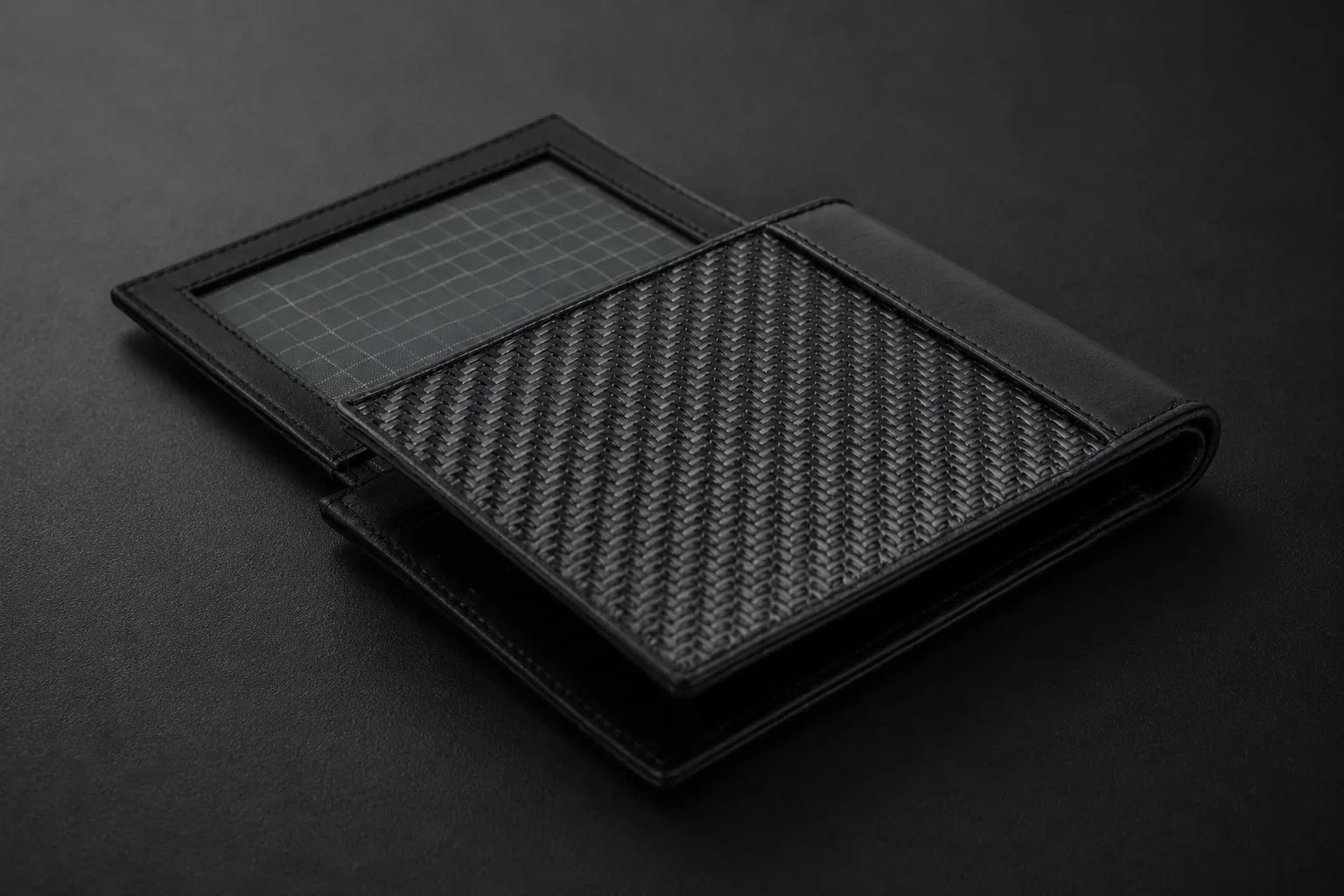
Most wallets are described the same way. Premium leather. Quality hardware. Built to last.
None of those words are a specification. They are adjectives, and adjectives cannot be checked.
A specification answers a different kind of question: who made it, what grade is it, where does it come from. Before you spend money on any wallet, from any brand including ours, ask these seven questions. A serious manufacturer can answer all seven. Most brands can answer none.
1. Who made the leather?
Not "what animal". Which tannery.
Leather quality is decided at the tannery, not at the workshop. The same words, full grain, top grain, genuine, cover an enormous range of quality. A named tannery has a reputation, certifications and documentation you can look up. An unnamed "premium leather" can be anything, including lower-cost split leather with a good finish, which is far more common in luxury goods than most buyers imagine.
2. Who made the carbon?
"Carbon" is the most abused word in accessories. There is genuine carbon fiber composite, engineered by companies you can name and email. And there is carbon-patterned film, printed leather and "carbon look" textile, which share nothing with the material except the pattern.
If a brand sells carbon, it should tell you whose carbon. The manufacturer, the product line, the grade. If the answer is missing, ask for the specification before assuming anything.
3. Is the titanium specified?
Titanium is not one material. It is a family of alloys with very different properties and prices. A brand using real engineering titanium will tell you the grade, because the grade is the point. If the description just says "titanium" or "titanium-coated", you have no way of knowing what is actually in your hand.
4. Which thread?
Nobody asks about thread. That is exactly why it is the first place a manufacturer cuts costs. Seams are the moving parts of a wallet; when a wallet dies, it usually dies at a seam or an edge.
Industrial thread has manufacturers, product names and certifications, like everything else in a real specification. A brand that names its thread has thought about the one component everyone else hides.
5. Where is it actually made?
"Designed in" is not "made in". Manufacturing origin can be more complicated than a country printed on a label. Ask where the cutting, skiving, assembly and stitching actually happen. A transparent brand will tell you the city, not just the continent.
6. What does the warranty actually cover?
"Lifetime warranty" often covers less than it suggests, because the conditions live in the fine print. A meaningful guarantee states three things plainly: what failure is covered, for how long, and what the brand does when it happens.
A wallet is a structural object. The honest question is: if it stretches, swells or loses its shape under normal use, will the brand fix it?
7. Can it be repaired?
A wallet built from documented materials by an actual workshop can be repaired by that workshop. A wallet assembled anonymously usually cannot, because there is no one to send it back to.
Ask what happens in year three. If the answer is "buy a new one", the price was rent, not purchase.
How we answer these questions
We hold ourselves to the same seven questions. Our answers are public.
The full documentation, including supplier specifications, layer architecture and construction methods, is in our public engineering file. The reasoning behind it is in COLDFIRE Paper No. 001: Why We Name Every Material.
Wallet Specification Checklist
| Question | Brand A | Brand B | Brand C |
|---|---|---|---|
| Tannery named | ☐ | ☐ | ☐ |
| Carbon manufacturer named | ☐ | ☐ | ☐ |
| Titanium grade specified | ☐ | ☐ | ☐ |
| Thread named | ☐ | ☐ | ☐ |
| Manufacturing city stated | ☐ | ☐ | ☐ |
| Warranty defined | ☐ | ☐ | ☐ |
| Repair policy stated | ☐ | ☐ | ☐ |
Print this page. Use it before buying any wallet.
Take the seven questions to any brand you are considering. Including us.
We don't ask you to trust us. We ask you to check.
Check the engineering file →


Сподели:
What to Keep in Your Wallet: The Items, the Capacity, and the Materials That Hold Them
The Word "Premium" Has Lost Its Meaning