
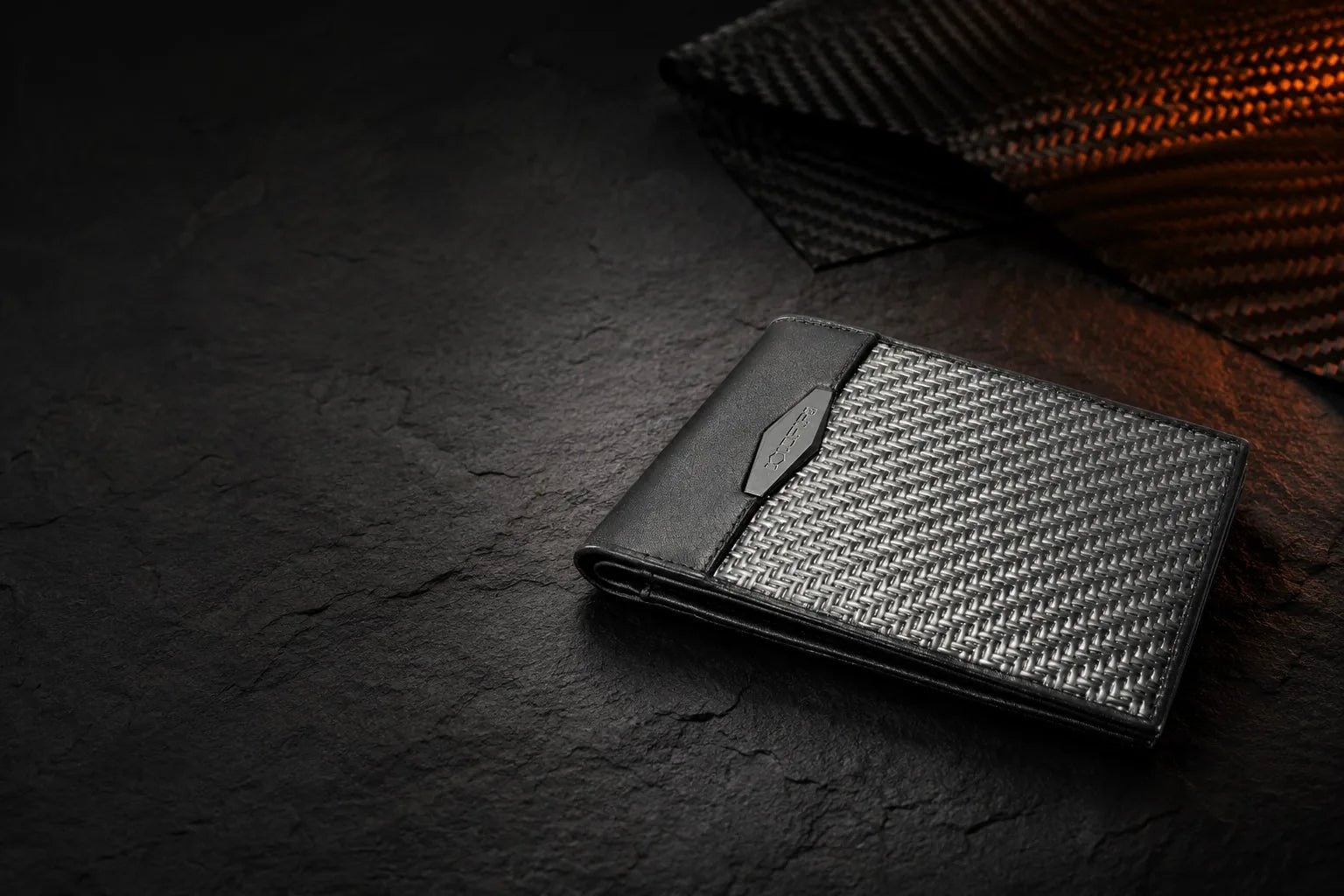
Updated June 2026. We build carbon fiber wallets, so read this knowing where we stand. We also kept the aluminum side honest, because rigid metal wallets do some things genuinely well.
Almost every modern slim wallet is built around one of two materials: aluminum plates (The Ridge, Ekster's case, Secrid's slide) or carbon fiber. They look similar in marketing photos and behave completely differently in your pocket. Here is the real comparison. (Weighing leather instead? That is a separate fight.)
First, a distinction most guides miss
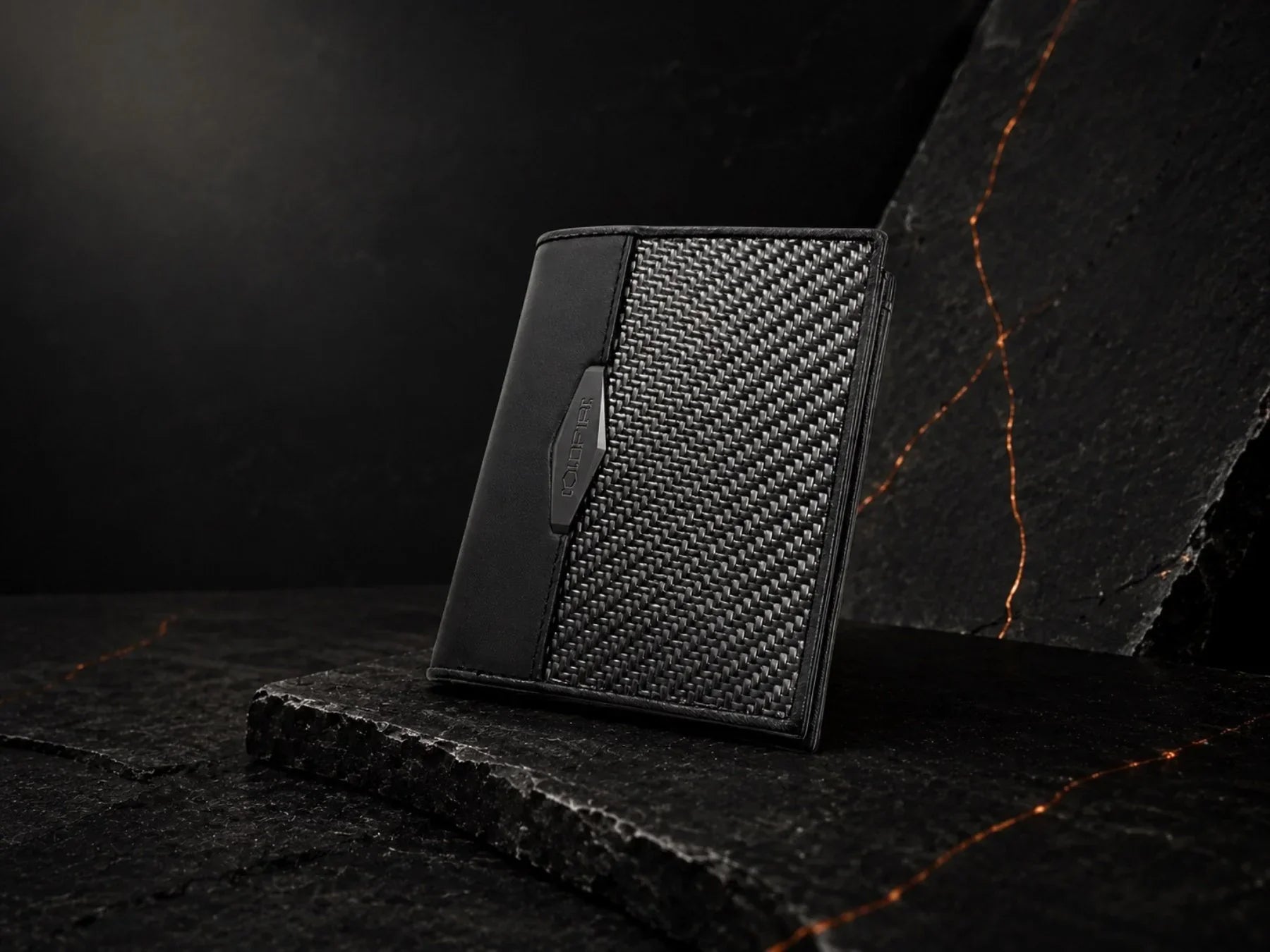
There are two kinds of carbon fiber wallets. Rigid carbon (hard molded plates) behaves like metal: stiff, light, hard-edged. Flexible carbon fiber is a different animal: woven carbon engineered to flex without fatigue. Our wallets use Carbitex Omniflex (CX6), a flexible carbon fiber that is roughly 10 times stronger and 5 times lighter than steel, bends with your pocket and returns to shape, every time, for years. When we compare below, we mean flexible carbon fiber.
The comparison
| Flexible carbon fiber | Aluminum plates | |
|---|---|---|
| Weight | 46 to 55g for a full bifold (Flex One: 46g) | ~56g for plates alone, 70 to 92g with leather shells and mechanisms |
| Comfort | Flexes with the pocket, no hard corners | Rigid block, hard edges, prints through slim trousers |
| Durability | No fatigue, no corrosion, no moving parts to wear | Plates last, but anodizing scratches and elastic straps or mechanisms are wear items |
| Cash | Carried naturally in the bifold | External clip or strap, folded tight |
| Capacity flexibility | Expands slightly and returns to profile | Fixed cavity; overstuffing strains the strap |
| Aging | Looks the same on year ten | Scratches and edge wear show on anodized surfaces |
| RFID | Added shielding layer (ours: RFID Data Armor) | Metal cavity blocks most signals by nature |
Weight: carbon wins, and the gap is bigger than spec sheets show

An aluminum Ridge weighs about 56 grams, which sounds close to our 55g Strike Core, until you add what the metal format needs to function: a cash strap or money clip, and in Ekster's case a leather shell around the case that lands the Parliament at roughly 92 grams. A complete Strike Core at 55g or Flex One at 46g already includes card slots, bill carry and RFID shielding. Nothing to add.
Comfort: the difference you feel every day
This is the argument nobody settles on paper, so try it in a front pocket: a rigid rectangle holds its corners against your leg every time you sit. Flexible carbon fiber bends a few degrees with the pocket and springs back. Same tensile strength league, completely different feel. It is the reason we engineer with Omniflex instead of plates, and the reason a flexible bifold disappears in a way a metal block cannot.
Durability: a draw with different failure modes

Both materials outlast leather by years. The honest difference is in what fails around them. Metal plate wallets rely on an elastic strap or a spring mechanism: that is the part that stretches, wears or breaks, usually years before the plates. A flexible carbon bifold has no mechanism at all; the material is the structure. Stitching is the only thing to inspect, which is why we sew with Amann Strongbond thread and back everything with a 2-year warranty.
The verdict
If you want a hard protective case and like the metal-block format, aluminum wallets are well made and The Ridge is the best of them. If you came here looking for a Ridge alternative without the metal-block feel, that is exactly the gap flexible carbon fiber fills: lower weight, natural cash carry, no wear-prone mechanism and a wallet that flexes with your body instead of against it. See how we build it on the materials page, compare the four Strike Series configurations, or see how the formats stack up model by model in our best slim wallets guide.
Frequently asked questions
Is carbon fiber stronger than aluminum?
Per gram, yes: carbon fiber has a higher strength-to-weight ratio than aluminum and does not corrode. Woven flexible carbon also absorbs flex cycles that would fatigue thin metal.
Do aluminum wallets block RFID better?
A closed metal cavity blocks signals by nature, which is convenient. But a dedicated shielding layer does the same job: COLDFIRE wallets integrate RFID Data Armor blocking 13.56 MHz RFID and NFC, in a softer, lighter package.
Why are Ridge-style wallets so popular?
They solved a real problem (bulky leather bifolds) with a durable product and strong marketing. The format works; the trade-offs are weight distribution, hard edges and cash handling. Flexible carbon fiber is the next step in the same direction: slim and indestructible, without the rigidity.
What is the lightest slim wallet format?
A carbon fiber sleeve: our Scout One weighs 25 grams at 5mm with RFID shielding, roughly half the weight of any aluminum wallet.
Share:
Best Men's Belt Styles for Every Occasion
Best Slim Wallets for Men 2026: Real Numbers, Honest Picks